‘Infected inmates suffer twofold’
Three questions for the Congolese doctor Danny Badila about the situation of prisoners living with tuberculosis

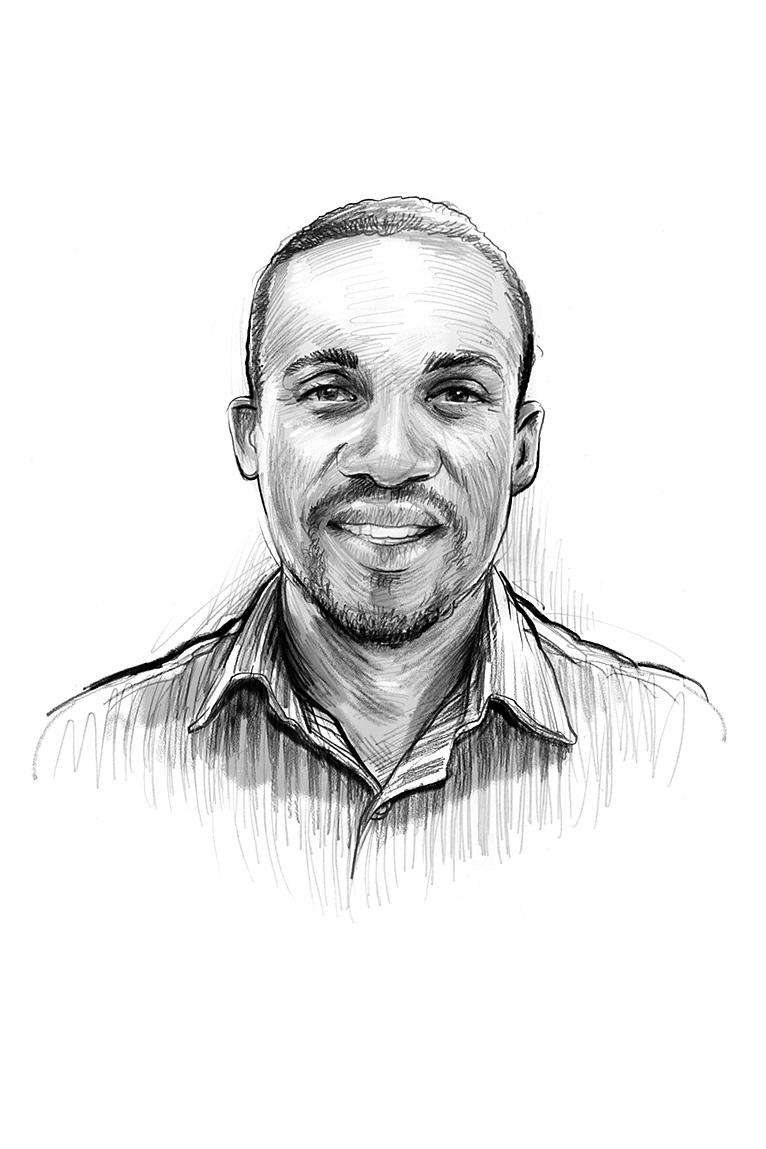
Danny Badila
The epidemiologist Dr Badila has been actively addressing health care in prisons for more than 20 years. He began working on improving the situation of inmates while he was still a medical student. In collaboration with the Global Programme BACKUP Health, he recently supported the development of a national strategy to fight tuberculosis and HIV in Congolese prisons.
How did you become involved in helping to improve the situation of prisoners?
Even as a medical student back in my early 20s, I wondered about the emotional and physical health of people in prisons. I began visiting people I did not know in prison, bringing them bread or sugar. Since then, not a day has passed that I have not thought about them. I joined a group that supports inmates. In 2018, we founded the non-governmental organisation Health for Prisoners to advocate for better health care, improved prison conditions and human rights in penal institutions. I spend so much time with the inmates that I often feel like one of them.
Why do the prisons in your country need to be geared more effectively towards the fight against tuberculosis?
Despite efforts by the Government and its partners, infected inmates suffer twofold – due to both imprisonment and the disease. Most of the prisons here face considerable challenges in fighting infectious diseases such as tuberculosis, HIV/AIDS and scabies, but also non-communicable diseases. Moreover, the conditions in the prisons – malnutrition, overcrowded cells, too little room, light, beds and clothing, poor ventilation and a lack of hygiene – facilitate the spread of these diseases and contribute to severe cases. Prisoners living with tuberculosis are often kept in isolation under alarming conditions, which also restricts their right to receive visitors and legal counsel. Inmates are some of the most vulnerable people, who urgently need help to improve their situation.
‘Inmates are some of the most vulnerable people, who urgently need help to improve their situation.’
You and GIZ were involved in the recently adopted national strategy. What does it aim to achieve?
The strategy is part of a national plan to fight tuberculosis and HIV. It is designed to improve infected inmates access to integrated health services. The Global Fund will initially be financing the implementation in nine out of a total of 26 prisons. In cooperation with GIZ, a colleague and I assessed the health services in prisons and drew up specific recommendations regarding action to be taken. Prisons need trained staff, the right equipment and a reliable testing procedure when inmates are admitted to and released from prison. In addition, there needs to be closer cooperation between the ministry of health and ministry of justice. That would help curb the spread of the disease inside and outside prisons.
Background information
The Democratic Republic of the Congo is one of the 30 countries most severely affected by tuberculosis. The Ministry of Public Health involved BACKUP Health in its national strategy to fight tuberculosis and HIV in prisons to take stock of the situation and produce a systematic plan of measures. On behalf of the German Federal Ministry for Economic Cooperation and Development (BMZ), BACKUP Health advises government and civil society organisations across the globe on how to use financing to strengthen health systems, focusing particularly on gender and human rights. This measure is financed by the UK’s Foreign, Commonwealth and Development Office.
