Green hydrogen, produced using renewable energy, is seen as the fuel of the future. Equally important are power-to-X (PtX) technologies, which convert renewable electricity into other forms of energy, for instance, in synthetic fuels or raw materials for industry.

Rethinking Green hydrogen and power-to-X energy
We support projects worldwide that rely on green hydrogen and power-to-X solutions, focusing especially on the countries of the Global South. Through this approach, GIZ promotes climate protection while also fostering economic development and energy security.

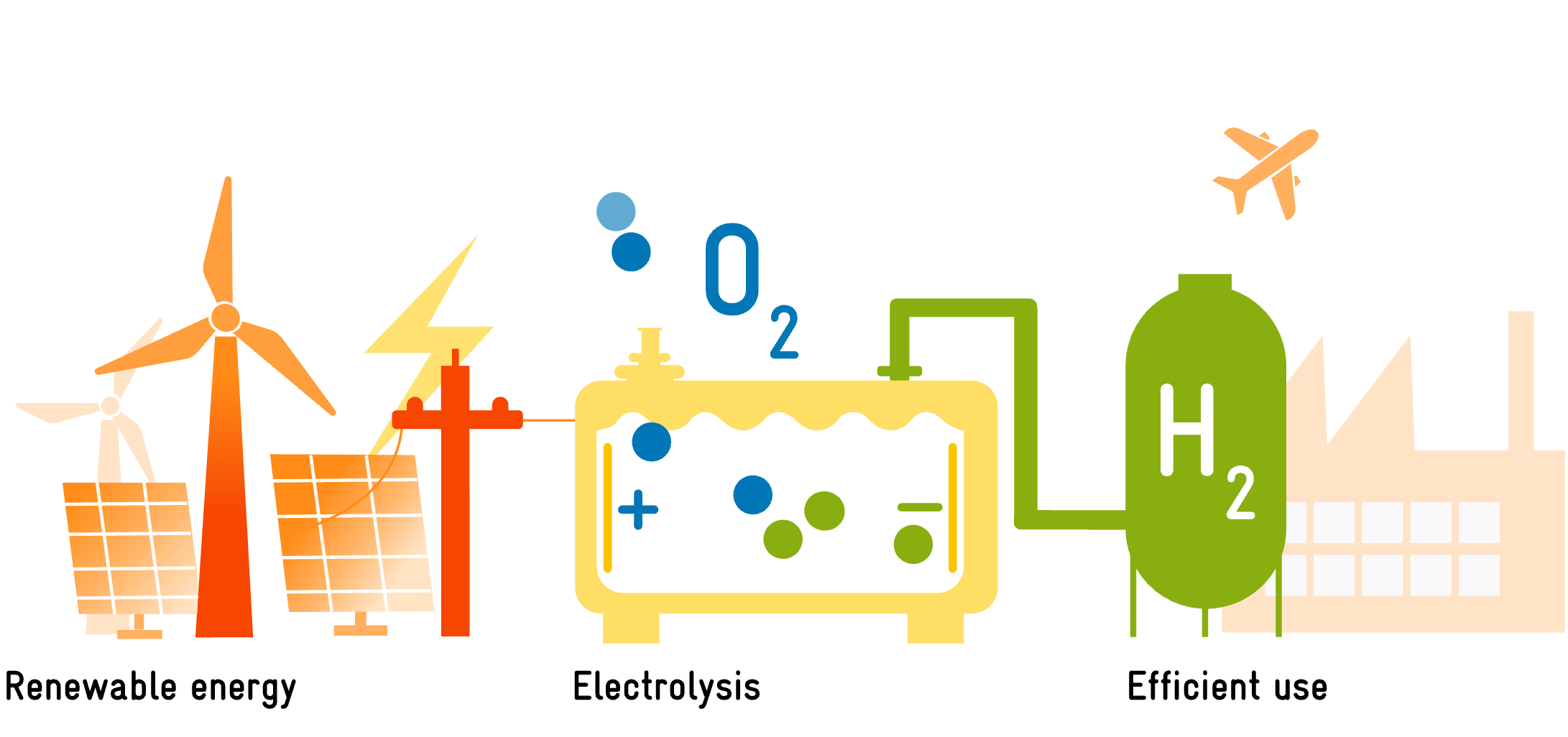
Green hydrogen and PtX: opportunities for climate protection and industry
Green hydrogen and PtX products can serve as a replacement for fossil fuels, particularly in sectors where the direct use of solar and wind energy is not feasible, such as the chemical industry, steel production, aviation fuel or shipping fuel.
What is Power-to-X?
Power-to-X (PtX) refers to technologies that convert renewable energy into other fuels, for example, hydrogen (power-to-hydrogen), synthetic natural gas (power-to-gas) or liquid fuels (power-to-liquid). This allows green energies to be stored, transported, and used in industry, transport and heating.
What we offer for the private sector
The market for green hydrogen: and PtX products is still in its early stages. While private businesses are driving development forward, they continue to require support. With our expertise, we promote sustainable hydrogen production and use in countries of the Global South.
How GIZ supports Power-to-X projects worldwide
Project support:
We provide support in project preparation, business model development, and risk mitigation, and are pleased to offer advisory assistance.
Networking and matchmaking:
In our partner countries, we establish contacts with ministries and with administrative, business and scientific bodies at national, regional and local level.
Financial and operational support:
We provide support for the initial stages of projects as part of public-private partnerships.
Training and further education:
We provide training for specialists and managers from businesses and authorities in our partner countries and train PtX trainers.
Advising governments:
We help develop standards, frameworks and hydrogen strategies and work closely with the European Commission and international organisations.
Moving into the future with green hydrogen
As part of its National Hydrogen Strategy, Germany is strengthening international partnerships to produce sustainable hydrogen and PtX products. These collaborations create benefits for all:
- Greater energy security thanks to diverse supply relationships
- Opportunities for German technologies on international markets
- Tangible climate protection with global impact
- Shared progress that fosters economic and social development in the Global South
Through targeted advisory services, networking and support, our goal is to ensure that technologies such as green hydrogen and power-to-X achieve the greatest possible impact.
Further information
Insights


This project focuses on the following GIZ work priorities:
The project contributes to these Sustainable Development Goals (SDGs) of the United Nations: