Energy for survival
Ukraine needs energy: for day-to-day life, for the economy and to defend itself against attacks by Russia. GIZ offers long-term support to Ukraine to expand decentralised energy infrastructures and also provide rapid assistance.

The full-scale invasion has now been raging in Ukraine for more than four years. Energy systems are a particularly frequent target, as Russia is carrying out systematic attacks on power plants and substations. As a result, power outages regularly bring infrastructures to a standstill that are crucial for survival. The unstable energy and heat supply is a threat to the country’s population, economy and medical care.
Ukraine is therefore focusing more closely on decentralised renewable energy sources and smaller energy systems. They are difficult to attack, reduce the country’s dependency on oil and gas – and lay the foundation for a future-proof, decentralised energy supply. GIZ supports Ukraine with these efforts – and has reached around 7.7 million people since 2022, who now have power and heat again.
Solar power for a hospital in eastern Ukraine
For example in an eastern Ukrainian city in the Kharkiv region. Here, the municipal health centre is a hospital, polyclinic and first-aid station in one. It is therefore especially important for people locally as the only large medical facility in the area. However, the east is particularly embattled, and there are frequent power cuts.
For this reason, the building is now being equipped with solar panels and battery storage. It can thus remain operational even during power outages – and provide medical care for around 12,700 patients every year.
The health centre in eastern Ukraine is part of the Renewable Energy Solutions (RES) programme. The German Environment Ministry and the European Investment Bank (EIB) launched the programme in 2025 within the scope of the International Climate Initiative (IKI). RES finances renewable energy systems for public buildings such as hospitals, schools and administrations. GIZ implements the programme together with the United Nations Development Programme (UNDP).

Term: 8/2025–12/2027
Budget: EUR 20 million
GIZ commission volume: EUR 3 million (funds from various different clients)
Parties involved: BMUKN, EIB, UNDP, GIZ
Objective: more than 50 green energy systems for public institutions
Capacity: on average 75 megawatt-hours per year and system
Supply for schools: up to 100 per cent of energy requirements
Supply for hospitals: up to 30 per cent of energy requirements, with the focus on critical areas such as operating rooms and neonatal units
Responsibilities are clearly defined: the EIB selects the buildings together with Ukraine’s regional development ministry; GIZ prepares the basic project designs together with the Ukrainian partners and shows the municipalities how they can operate the new systems. The UNDP procures and constructs the systems locally.
New partnership with the European Investment Bank
RES is a model project: GIZ signed a cooperation agreement with the EIB for the first time – technical and financial support is thus directly interlinked. A cooperation arrangement that can set a precedent and multiply results.

‘The EIB, together with its partners, is committed to supporting Ukraine’s recovery and green transition. Russia’s attacks have severely damaged energy infrastructure, making resilient, decentralised solutions more urgent than ever. By investing in renewable energy, we address immediate needs while laying the foundation for a secure, clean energy future for Ukrainian communities.’
Donations and winter assistance
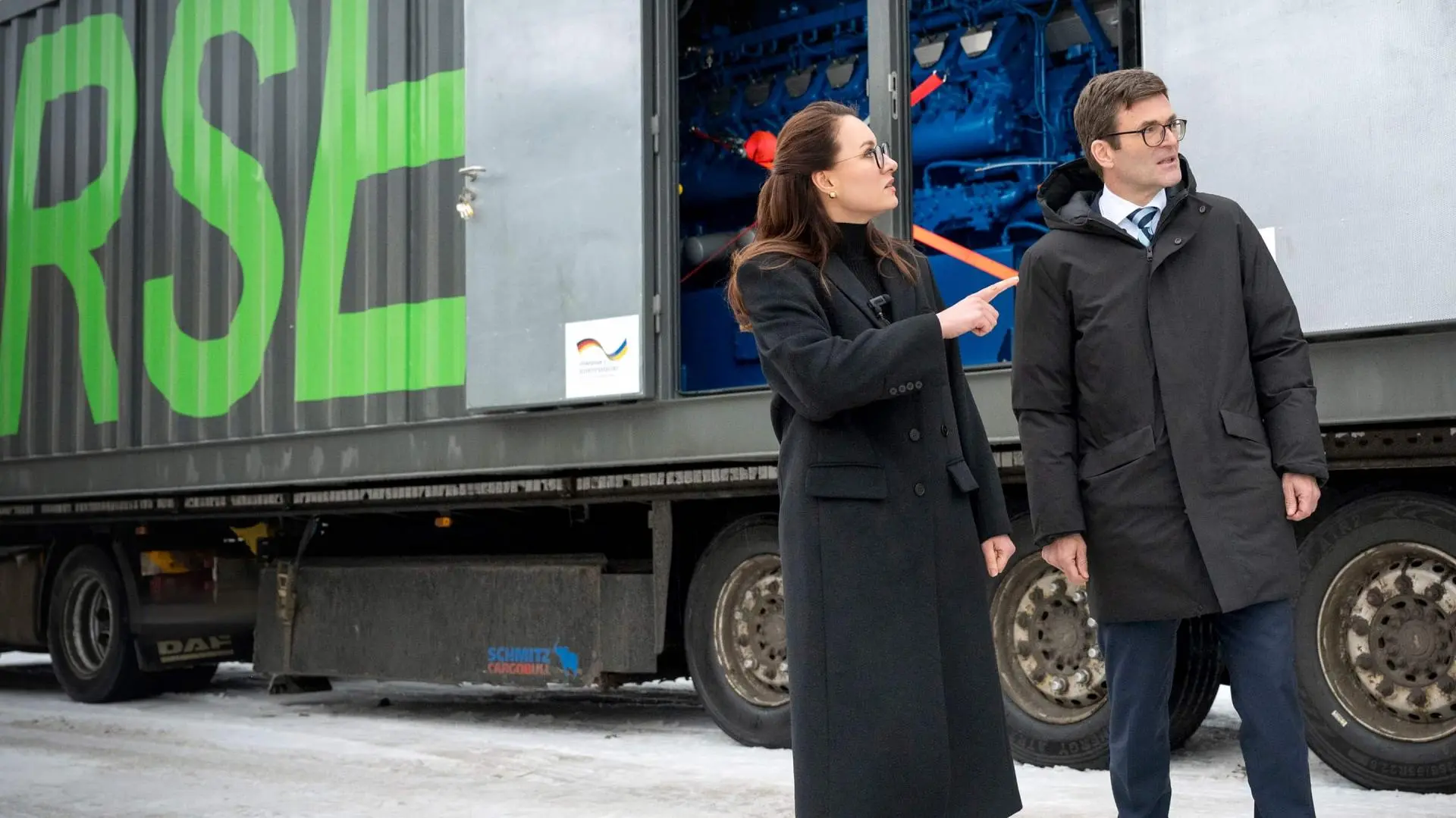
Ukraine also receives rapid assistance for the supply of energy and heat through a GIZ donation campaign run on behalf of the German Federal Ministry for Economic Affairs and Energy (BMWE). Through this campaign, German companies deliver transformers and other urgently needed energy technology equipment to Ukraine. An example: the grid operator Stromnetz Berlin provided 31 transformers to Ukraine. In total, 34,500 donated goods have been delivered to the country, allowing 1.4 million people to receive power and heat again.

This is in addition to the winter assistance provided by GIZ on behalf of the German Federal Ministry for Economic Cooperation and Development (BMZ), financed by transitional development assistance. The assistance ensures that people and public institutions still have power and heat in the winter – even with damaged infrastructure and frequent outages. As part of the winter assistance for 2025/26, GIZ received EUR 72.3 million to procure energy and heating technology for Ukraine that was urgently needed at short notice, such as combined heat and power units, PV systems, battery storage and construction vehicles for fast repairs.
The goods complement the GIZ measures that are currently in place and stabilise supply, particularly for heating utilities, in hospitals, schools and municipalities. A large share of the technology is from German companies.
Scope: EUR 72.3 million
Delivery: equipment for the supply of power and heat, including 300 solar power systems, 375 battery storage devices, 17 modular boiler systems, 44 mobile boiler systems, 33 container-based combined heat and power units, 14 pellet systems, 15 hybrid generators, 45 construction vehicles
Procurement: 56 per cent of orders placed with German companies, 22 per cent with companies from other EU countries, 17 per cent from Ukraine with German products, 5 per cent from Türkiye
Beneficiaries: 2.29 million Ukrainians
Securing power and heat remains an ongoing task – and Ukraine continues to require international support. GIZ has been supporting the country since the beginning of the full-scale invasion: with rapid emergency assistance, long-term projects and an energy supply that is also fit for the future.