Global responsibility, African impetus
Solidarity, equality, sustainability – this is the theme of South Africa’s G20 presidency. GIZ is supporting Germany’s key partner country with a broad portfolio of activities.


"Whatever we do, it has to be sustainable. For our planet. And for every single child, so that they have the chance to make the most out of their life."
When Josephilda Nhlapo-Hlope, Chair of the G20 Development Working Group, talks about justice, she has a clear vision: for the government official from Pretoria there can be no equality without solidarity, and no sustainability without equality.
South Africa heads the G20 for the first time
For the first time, an African country – South Africa – holds the presidency of the G20 – a historic moment for the continent. South Africa chose solidarity, equality and sustainability as guiding values for its G20 presidency – values that are deeply rooted in its own history, particularly in the fight against apartheid. There will be a double first for the G20 summit: it is taking place in Africa for the first time, and the African Union is represented at the table as an official member. This gives Africa a stronger voice among the world’s leading economies and creates the opportunity to put issues that matter to the continent on the global agenda.
In light of today’s global challenges, South Africa is advocating for concrete progress in key areas during its G20 presidency. The focus is on protecting vulnerable countries from climate-related disasters, fair solutions to the debt burden of the Global South and financing a socially just energy transition. In doing so, South Africa is not only contributing African perspectives to the G20 process but also providing impetus for international cooperation that puts people at the centre and rethinks global responsibility.
Focusing on a just energy transition
A central issue is the Just Energy Transition (JET), the question of how to shape a global energy shift that is ecologically and economically sustainable while also offering citizens opportunities for income and employment.
Although South Africa has great potential for wind and solar energy and has also recently made significant progress in using renewable energies, most electricity still comes from domestic coal, resulting in high levels of air pollution. This is a pint highlighted by Dr Titus Mathe, CEO of the South African National Energy Development Institute (SANEDI) and member of the G20 working group on energy transition. Coal-fired power generation contributes significantly to the CO₂ emissions that are fuelling climate change. The effects of this are already being felt by people in South Africa – and across the continent – in the form of droughts and floods.
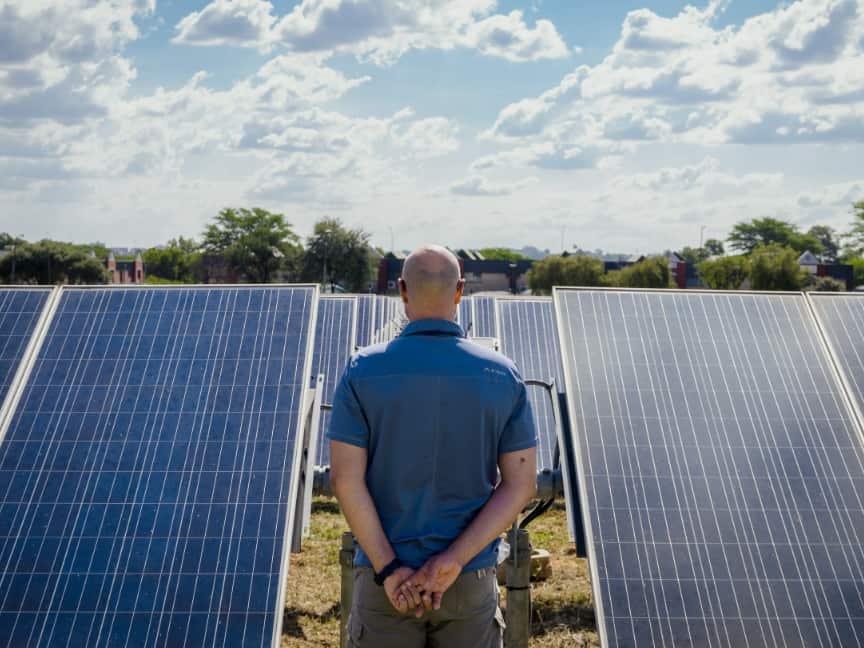
Just Energy Transition
What does the term ‘just energy transition’ mean? The term ‘transition’ describes a gradual switch to low-carbon technologies. ‘Just’ refers to the need for this transition to avoid any negative impact on society, jobs and livelihoods. In other words, it is not simply about switching from coal and oil to renewable energy, but also about making the transition fair and inclusive for all.

30 years of GIZ in South Africa
To pursue a sustainable path for the energy transition, South Africa aims to link energy and climate policy with new economic and employment opportunities for the next generation. The Deutsche Gesellschaft für Internationale Zusammenarbeit (GIZ) GmbH is supporting the country in this process. Since 1995, GIZ has been contributing its expertise in South Africa on behalf of the German Government, for example by promoting projects that integrate energy, climate, employment and vocational training.
In a recent interview, Federal Development Minister Reem Alabali Radovan said it was wise to strengthen economic cooperation with South Africa. As a resource-rich emerging economy, South Africa is the country with the most developed industry on the continent and a gateway to the African domestic market. At the end of July 2025, Alabali Radovan travelled to South Africa to attend the meeting of G20 development ministers.

"We work strictly on a demand-driven basis. We follow the priorities of our partners and develop solutions through consultation, dialogue and joint planning."
On an equal footing with South African partners
‘Our work has a direct impact on people locally,’ says Viaksha Mohabir, GIZ advisor to the G20 Energy Transition Working Group. ‘Whether it’s a municipality managing its energy consumption more efficiently or a young woman finding work in the energy sector. I have seen how we achieve results side by side with our South African partners.’ GIZ builds on trusted partnerships with government institutions, industry and local actors. ‘We work strictly on a demand-driven basis. We follow the priorities of our partners and develop solutions through consultation, dialogue and joint planning,’ says Viaksha Mohabir.
Sharing experiences with the G20
The importance of long-term planning was demonstrated in 2022, when the Komati coal-fired power plant was taken off the grid, a symbolic moment recalls Dr Mathe, who guided the plant’s shutdown process. There were considerable deficits, he reports. But a lack of jobs for former coal workers and technical issues such as grid instability showed that a just energy transition requires more than just phasing out coal. ‘We have to share these tough lessons with the other G20 countries,’ says Dr Mathe.
In its projects, GIZ provides not only technical and organisational advice but also supports the social dimension of the transformation. For example, together with its partners, it offers training and retraining programmes and supports local businesses to ensure that affected communities are involved in the reshaping of the energy economy. It also promotes university-level programmes that impart knowledge on integrating renewable energies into the electricity grid and reforming the electricity market – key prerequisites to the successful energy transition in South Africa.

"We need to agree on decarbonisation. And we have to recognise that this transition costs money. We need international financing pledges for real emission reductions.“
Signals expected from the G20 summit
Looking ahead to the G20 Summit in Johannesburg at the end of 2025, Dr Mathe is hoping for clear signals: ‘We need to agree on decarbonisation. And we have to recognise that this transition costs money. We need international financing pledges for real emission reductions.’ South Africa aims to be climate-neutral by 2050. Dr Mathe emphasises that the path towards this must be open to technology, but consistent. ‘And we need to agree that each country should be allowed to shape its energy transition at its own pace, scope and in its own time.’ Energy security is the top priority.
Josephilda Nhlapo-Hlope shares this view. Her office is in full swing for the summit. The gathering of G20 Heads of State and Government in Johannesburg is not just a platform for mobilising resources, but also a space for new ideas, she stresses. ‘We also want to represent the continent – and especially South Africa. We want the world to see us for what we are: a country for tourism, for partnerships and for investment.’ South Africa has potential – as does the entire continent.
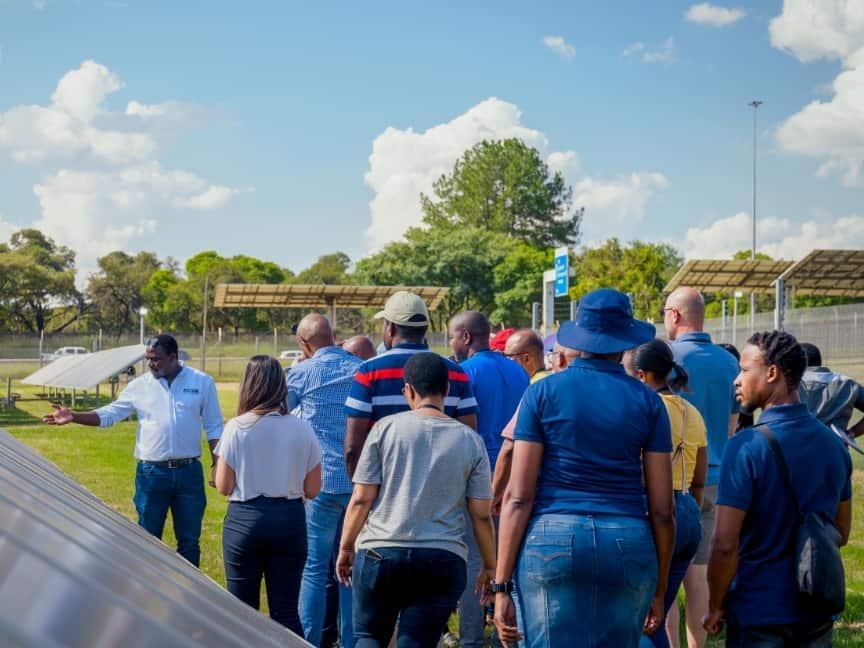
Supporting the energy transition
GIZ has a broad portfolio of projects that support the just energy transition in South Africa:
Supporting the transformation of the South African energy sector on behalf of BMZ and co-financed by the Swiss State Secretariat for Economic Affairs (SECO)
Contact: Nicole Taeumel
Improving the grid and system integration of variable renewable energies on behalf of BMZ
Contact: Anna-Maria Heisig
Promoting green hydrogen on behalf of BMZ
Contact: Rebekka Hilz-D’bichi
Catalysing climate neutrality in industry, aviation and shipping in Argentina, Morocco and South Africa on behalf of the Federal Ministry for the Environment, Climate Action, Nature Conservation and Nuclear Safety (BMUKN) via the International Climate Initiative (IKI)
Contact: Alexander Mahler
Just Transition to a Decarbonised Economy for South Africa (JUST SA) on behalf of BMUKN
Contact: Christina von Heyden
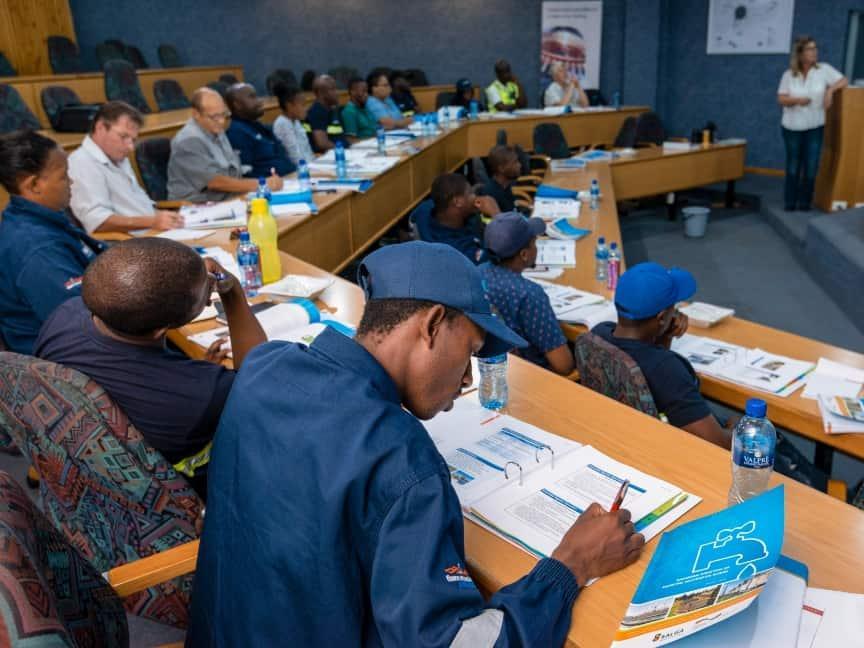
New job prospects
Income and employment prospects for South Africans are an important part of a socially just energy transition:
Vocational prospects for employment on behalf of BMZ and co-financed by the Swiss State Secretariat for Economic Affairs (SECO) and the EU
Contact: Kirsten Freimann
Employment prospects in the digital world on behalf of BMZ
Contact: Suraya Adam
Support to the Initiative for Youth Employment on behalf of BMZ
Contact: Tobias Muehler
Transforming coal regions for a just energy transition on behalf of BMUKN
Contact: Philipp Schattenmann


