‘Cuts to the development budget are a mistake’
Marcel Fratzscher believes that investing in the Global South is just as important as investing in Germany. The President of the German Institute for Economic Research (DIW Berlin) says that without open markets and international partnerships, our prosperity will decline.

Mr Fratzscher, how important are international relations for Germany from an economic perspective?
Good partnerships and open markets are essential for the German economy. No other economy of its size is so heavily dependent on global markets. More than 40 per cent of economic output comes from exports, and almost one in two jobs depends on them directly or indirectly. In the past, this has allowed us to create considerable prosperity, which is now in jeopardy for various reasons. To safeguard this prosperity, we do not need isolation, but rather continued openness, fair competition and common rules – and this can be achieved only through international relations. They are incredibly significant for us.
Does that also include countries in the Global South?
The Global South is important – and has previously been underestimated massively in Germany. These countries will become even more important. First, to minimise risks: we have recently made the mistake of becoming too dependent on the US and China. By forging closer economic and political ties with countries in the Global South, we can reduce these dependencies. That is a huge opportunity.
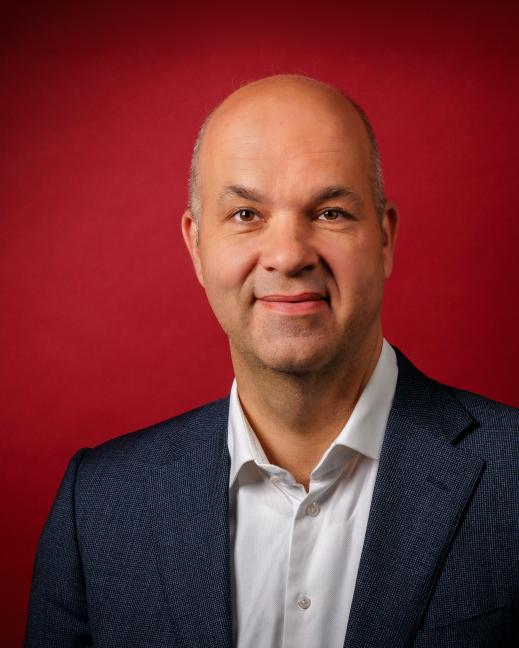
is the President of the German Institute for Economic Research (DIW Berlin) and Professor of Macroeconomics at Humboldt University in Berlin. Among other things, he is a member of the Advisory Board of the German Federal Ministry for Economic Affairs and Energy (BMWE) and the Euro50 Group, an independent and informal forum in which international economists, central bankers, politicians and representatives of the financial sector advise on European economic policy. Fratzscher’s work focuses on issues relating to macroeconomics and financial markets, inequality, globalisation and European integration.
‘The markets of the future are in the Global South. We must pursue closer cooperation much more than we have up to now.’
Second, these economies are set to experience strong growth due to demographic reasons. This is where the markets of the future lie. We must therefore pursue closer cooperation with them much more than we have up to now. We should certainly not be naïve and believe that these countries are waiting for us; on the contrary, we must engage with them.
At the moment, however, the private sector is still very reluctant to invest, for example in Africa. Why is that?
For the typical German small and medium-sized enterprise, it has so far been much easier to invest in another European country or even in China than in Ghana or Nigeria. That is one reason for the reluctance to invest in Africa; the other is linked to the countries themselves. Many countries in Africa are still relatively poor, with low per capita income. In some regions, there are also uncertainties and conflicts. But Africa is changing. And we should support this change, for example by providing assistance through development cooperation to establish stable institutions and combat poverty. This supports the countries themselves, but in the long term it benefits the whole world and, of course, Germany and our economy, too.
What would we need to offer these countries to persuade them to opt for economic cooperation with Germany and Europe rather than with China?
Above all, honesty and reliability, so that long-term and strong partnerships can really be forged. The other side must see that this creates genuine added value for them. That is what sets us apart from others. But this alone is not enough. We must also remove trade barriers to Europe. So far, there have been significant obstacles for African countries, in particular, if they want to trade with us. This applies, above all, to agricultural goods. These barriers are harmful. To establish partnerships on an equal footing, the EU must open up its market.
‘GIZ has contacts all over the world – it is trusted and can harness this even more than before to open doors for German companies.’
How can international cooperation help to strengthen partnerships with countries in the Global South?
By continuing its work and doing everything it can to stabilise these countries, create favourable conditions and set up training programmes, for example, so that German and European companies can invest and trade. GIZ has contacts all over the world – it is trusted and can harness this even more than before to open doors for German companies.
Solidarity and shared economic interests need not be a contradiction; rather, they can go hand in hand if contracts are fair and nobody is misled. We must play to our strengths – this is the only way that we can compete with China. And only if we present a stronger European front. GIZ can and should contribute to this as well.
How exactly could GIZ support the private sector in gaining a foothold in more challenging markets?
The Chambers of Commerce Abroad, which are very closely connected to domestic associations and chambers of commerce, are valuable here. GIZ should cooperate more closely with them. This is already happening to some extent, but there is certainly still more potential for systematic cooperation. I believe that the combination of German Chambers of Commerce Abroad (AHKs), companies and GIZ is very promising.
‘Development policy is security policy and, in every respect, a wise investment.’
As an economist, what do you make of the development budget?
I think that cuts are a mistake. We are massively increasing defence spending – and development policy is in the same category for me. It is security policy and a wise investment in every respect: geopolitically, economically, in terms of war and peace, and as a measure to prevent large-scale migration. And here’s another comparison: over the next ten years, we’ll be spending EUR 500 billion on investment in infrastructure and climate protection in Germany, not least at the local level. I think that’s absolutely the right thing to do. But investment in the Global South is just as urgent and important.
‘We should not start playing off investment in Germany against investment elsewhere. Economic success can be achieved only if we have both.’
Can you understand why people might ask why we should build roads and bridges elsewhere when we have a backlog of investment here?
That line of thinking is wrong. We should not start playing off investment in Germany against investment elsewhere. They complement each other. It is not a case of one or the other: economic success can be achieved only if we have both. Only then can we create the dynamism and division of labour that our economy needs.
Is artificial intelligence changing anything about Germany’s shortage of skilled workers? Does it mean that we need less immigration and, consequently, less international cooperation?
We do not yet know precisely how AI will change the world of work over the next five to ten years. But particularly in sectors that AI cannot easily replace, we have experienced high levels of immigration in the past already and will be even more reliant on it in the future. For example, in the nursing and care sector and in hospitals. Not least because the baby-boomer generation is now gradually retiring. If we shut this down, the economic damage to Germany will be very significant. I repeat what I said at the beginning: without international relations, our prosperity will decline.


