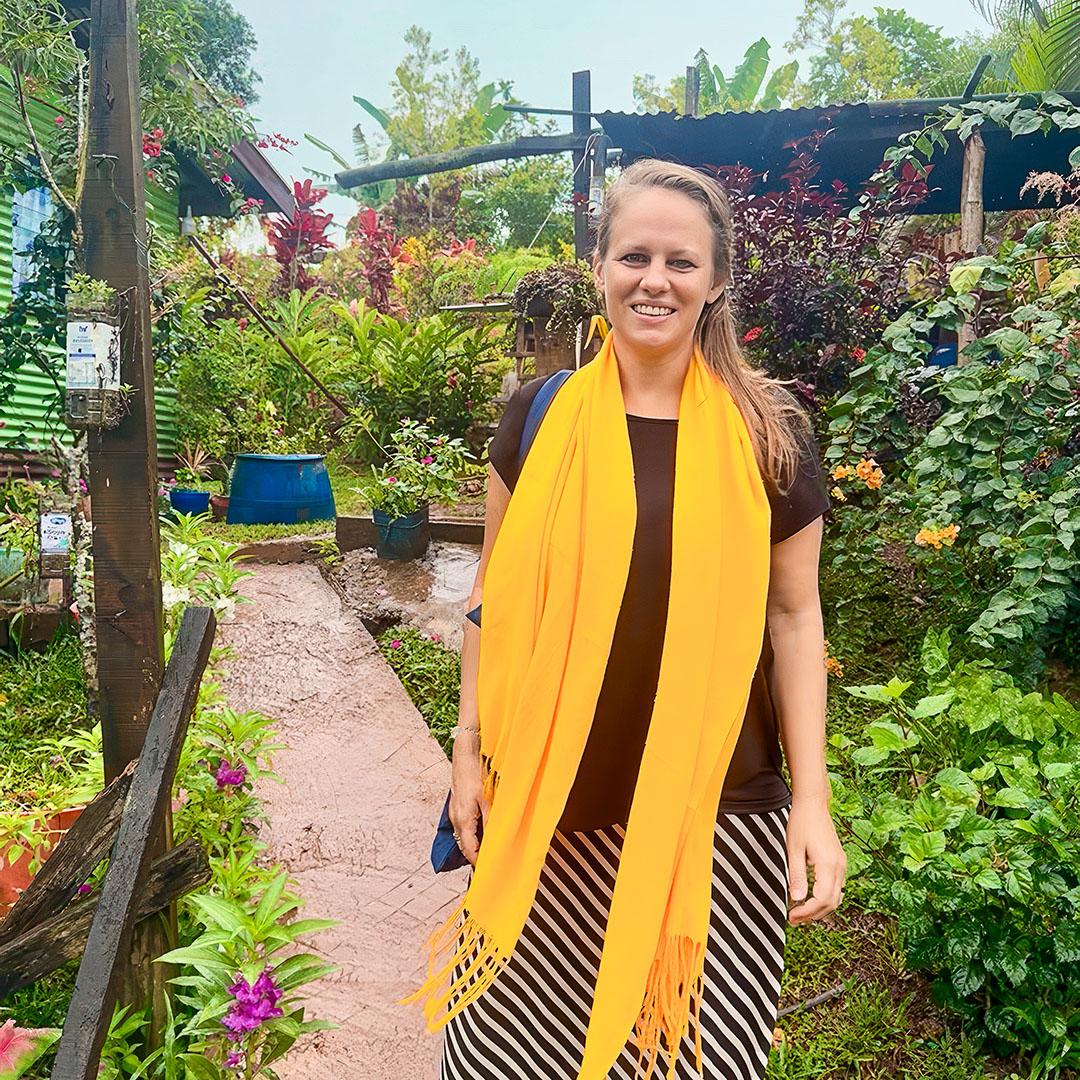
 Photo: private
Hello from Suva,
My name is Anina Vontobel. I am from Switzerland and have been working for GIZ for more than ten years now.
My team and I are currently advising the Fiji Government on something that might seem like a distant vision in many countries, but is already reality in the Pacific: planned relocation of communities that are hit particularly hard by the impacts of climate change.
After completing a degree in political science, a second master’s degree in development cooperation and posts in Uganda, Kenya and Geneva, I joined GIZ in Nepal as a junior advisor. In this role, I helped to reintegrate former Maoist rebels – including women, children and young people – back into civilian life. It was powerful to see how initial suspicion gradually gave way to trust and solidarity. Peace develops largely in day-to-day life, when people can look to the future again and work to shape it together – just like a former combatant and a woman from the community who met through our project while training to become electricians. They went on to set up a business together.
After an interim position at a Swiss NGO, where I supported women affected by war in northern Sri Lanka in developing new income opportunities, I returned to GIZ as an advisor in Bonn in 2016. I spent three years there working on the nexus between humanitarian aid, peacebuilding and long-term development. Shortly before I then left for Sudan, the revolution began. The situation was fragile, particularly in the project region of Darfur. We frequently had to plan again from scratch because the circumstances kept changing.
Due to the security situation and as a result of COVID, there were several times where I had to manage my team remotely from Germany for extended periods. This experience showed me what it means to deal with uncertainty and still remain capable of action. I have seen how important trust, individual responsibility and a committed local team are – especially when you cannot be there yourself.
Fiji is a small country, and many actors know each other personally. This creates short lines of communication and a high level of trust. I am really impressed by the commitment of ministries and civil society actors in our joint efforts to develop one of the world’s first state-run systems for planned resettlements in the context of the climate crisis. For the communities concerned, this is about far more than just homes and infrastructure – it is about their culture and identity.
Looking back, the challenges in the various countries were often very different, but the topics were similar: people want security, prospects and the chance to shape their own lives. For me, meeting local people, hearing their stories and seeing the changes that occur, however small or large, is the best part of my work.
Moce sota tale!
Anina Vontobel