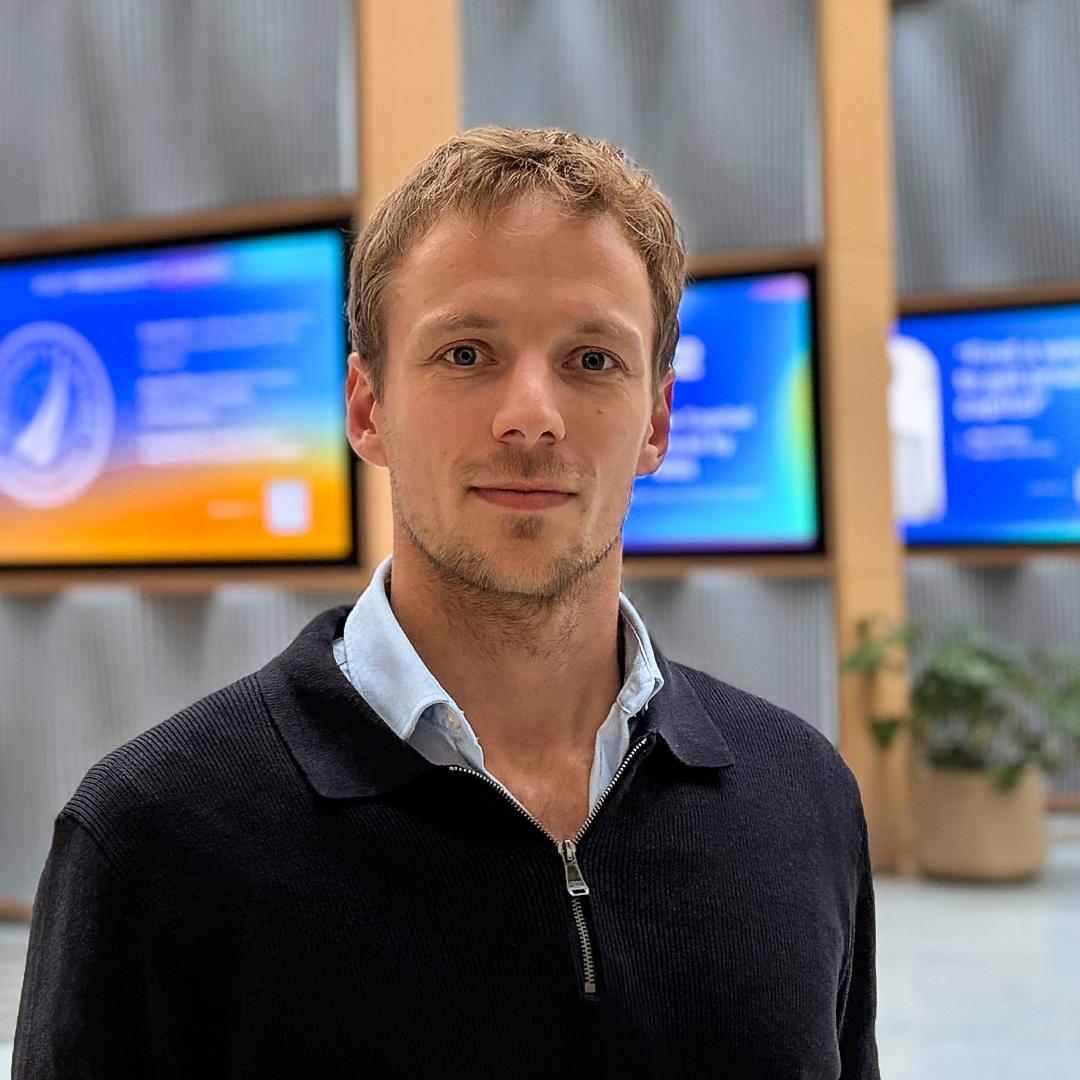
 Photo: private
Hello from Washington,
My name is Jonas Wittern and I work as a GIZ agricultural economist on secondment to the World Bank. In my team, we focus on agricultural policy. We analyse how countries support their agricultural sectors, advise governments on reforms and support pilot projects that demonstrate new approaches to more sustainable agricultural policy.
The World Bank and GIZ are active in many similar areas. By working closely together, we can combine our strengths and bring effective solutions to scale. This is particularly important when budgets are tight. GIZ is a valued knowledge partner: it has a wealth of experience from projects in countries around the world and knows what works on the ground. The World Bank, for its part, is able to work with governments to implement proven approaches on a larger scale.
Zambia is one such example. On behalf of the Federal Ministry for Economic Cooperation and Development (BMZ), the World Bank works alongside the Ministry of Agriculture to make agricultural support more sustainable. At the same time, our team also draws on expertise from GIZ.
One area in which GIZ supports this southern African country is the adoption of farming practices that protect soils and can better withstand climate change. GIZ also contributes to improving agricultural extension services and facilitating farmers' access to credit. The insights gained in this process provide a valuable basis for policy reforms and help to scale up what has worked in practice. Building on this, the World Bank can work with the Zambian Government to mainstream and implement these measures nationwide. This is how technical and financial cooperation go hand in hand.
I became involved in international cooperation through practical project experience in Latin America, including in deprived neighbourhoods, with agricultural cooperatives and on field trials of more efficient irrigation techniques. There, I saw first-hand how concrete measures at the local level have a direct impact on people’s lives and make a real difference to their living conditions. During my studies in agricultural science and economics, I was particularly interested in the question of how development cooperation can have an impact beyond the project level.
After university, my career path led me to GIZ. There, I initially advised BMZ on agricultural policy issues, then worked on an agricultural trade project in West Africa, and most recently was involved in engagement with political partners and communication on agricultural policy. In late 2025, the opportunity arose to move to the World Bank in Washington. For me, this was an exciting change of perspective: having worked closely with the World Bank whilst advising BMZ, I was now able to help shape the partnership from the other side.
For me, there is no such thing as a typical working day at the World Bank. As well as liaising with governments and producing analyses – for example, on the effectiveness of agricultural subsidies – I travel internationally with colleagues. We bring together experience and knowledge from different countries and examine how successful approaches can be adapted to other contexts. For example, we look at whether and how tried-and-tested solutions from South-East Asia and Latin America might also be suitable for Southern Africa.
A major highlight of my work is being part of a great team. This is what motivates me to drive things forward in collaboration with others. What I find particularly rewarding is seeing shared ideas translate into concrete changes in policy and practice.
Kind regards,
Jonas Wittern