The global water crisis affects us all
Climate change and overuse are making water a scarce resource. Our colleague Dieter Rothenberger explains how GIZ is working to tackle this crisis. He coordinates the projects with which we improve water and sanitation provision across the globe.
Lake Constance’s water level is at an all-time low; cargo ships on the Rhine can no longer be loaded fully; operation of the ‘Weiße Flotte’ paddle steamer fleet in Dresden is restricted. This is the kind of news that has been reaching us from across Germany this summer. Heat and drought are causing water levels to fall. Even here, in an area that should have abundant water resources, the situation is becoming critical.
Worldwide, the situation is even more dramatic. In the Horn of Africa, people have been suffering immensely for years, because rainy seasons are failing repeatedly, and agriculture is barely possible anymore. Countries in the Sahel region are experiencing the same thing. In parts of India and Pakistan, too, groundwater levels are falling. Many states are now experiencing a historic water crisis.
If you look across the globe, there is a clear pattern: water is becoming scarcer. So scarce, that the United Nations recently declared a state of ‘water bankruptcy’: the world is using more water that it can naturally replenish. While there have been droughts in the past, water shortages were usually followed by a recovery phase. Today, this is no longer guaranteed, due to higher temperatures and the loss of nature.

Water as a key factor for the economy and supply chains
Water is important for every sector of the economy: in agriculture, naturally, but also in the energy supply, steel production, paper production, the chemical industry and the construction industry. And, of course, in the IT sector – neither semiconductor production nor data centres would function without water.
Water scarcity elsewhere is now also affecting us via global supply chains. Recent higher coffee prices can be traced back to droughts in key coffee-growing regions such as in Brazil and Viet Nam. The situation is similar with olive oil, particularly in the Mediterranean in Spain and Greece. Lithium extraction for batteries in computers and electric vehicles also requires a large amount of water, in regions that are frequently dry, for example in Chile and Argentina.
Water crises that were previously far away and limited in people’s minds to desert regions in Africa have therefore now become a global problem that affects us all. It is all the more important not to simply let this situation play out, but instead to tackle it.
How GIZ is strengthening water systems – for people and the economy
Solutions to many of these issues exist, and we are helping to drive them forward at GIZ. Investments in sustainable water systems, reservoirs, sewage treatment plants, efficient irrigation solutions and higher water productivity are worthwhile. They help to ensure better, more mindful use of water. This way, more resources remain available for those who previously lacked access to clean drinking water – roughly one in four people. This is still far too many, because water is a basic need and a human right. It is also a matter of dignity, health and participation.
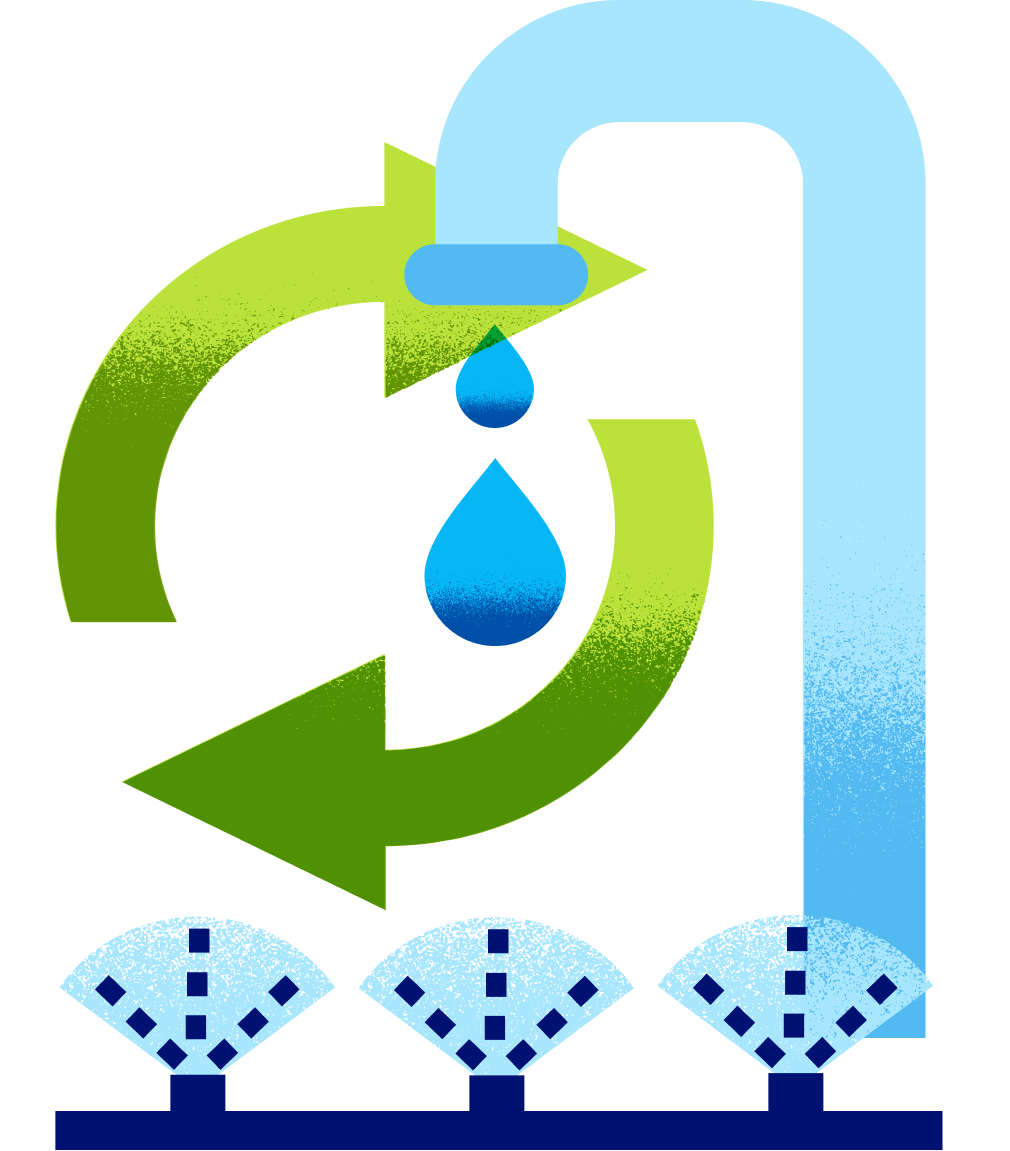
For this reason, our measures cover a broad spectrum. We support utilities in optimising their water management – for example in Jordan, where we are helping to detect leaks and modernise networks. Or in Morocco, where we are working to establish a circular economy through which wastewater can be treated and reused.
Safe water for all
We are assisting farmers in using more water-saving methods to irrigate their fields. In Ethiopia, we are supporting farmers in adapting to longer dry periods using water reservoirs. In Mexico, we are working with drinks manufacturers and farming families to replenish groundwater levels through a more careful approach to nature.
In schools in Asia and Africa, we are helping to ensure that more school pupils benefit from better hygiene and clean water. Today, the water management system is providing people with water in many places where this was previously not the case – thanks to digital solutions that we have applied and expert training that we have initiated.
And in 2023, with the Urban Water Catalyst Initiative (UWCI), we created an instrument that strengthens municipal water utilities. The UWCI is enhancing utility companies to make them more effective. Ultimately, after all, they are responsible for providing safe water to everyone in the local area.
Water diplomacy as a key to resolving international conflicts
Finally, we provide mediation support when states share a water source, for example the Nile. Through the Nile Basin Initiative, GIZ brings together the eleven riparian states and supports them in using water jointly. In doing so, we are helping to establish a system that enables the countries to monitor their water use and exchange data. In addition, together with our partners, we are developing an investment programme for the entire Nile Basin. This close technical cooperation builds trust and also facilitates political negotiations. As a result, most of the riparian states, including Ethiopia, have now signed a shared framework agreement, thereby paving the way for a Nile Basin Commission comparable to the Rhine Commission in Europe. We provide similar support in the Mekong Delta and the Niger Basin.
This all aims to ensure that water is not an additional stress factor in an already turbulent world. Our objective is to mitigate the global water crisis with foresight. This involves securing water worldwide as a resource for economic development, cooperation and stability. This benefits all of us.


