Water for all
Clean water cannot be taken for granted. Water scarcity threatens billions of people. Our infographic highlights the challenges and possible solutions.
Water scarcity is an underestimated crisis. It affects a large proportion of humanity. The United Nations now refers to this issue as ‘water bankruptcy’ – because globally we are constantly overusing water resources.
75 per cent of all people live in regions where there is no reliable water supply. Around four billion people – just under half the world’s population – experience severe water scarcity for at least one month each year.
But there is also good news: more and more people have access to safe drinking water. And often, even small investments are enough to generate major results for people and economies.
Around two billion people have gained access to safe drinking water since the turn of the millennium. The proportion rose from 62 per cent of the world’s population in 2000 to 74 per cent in 2024.
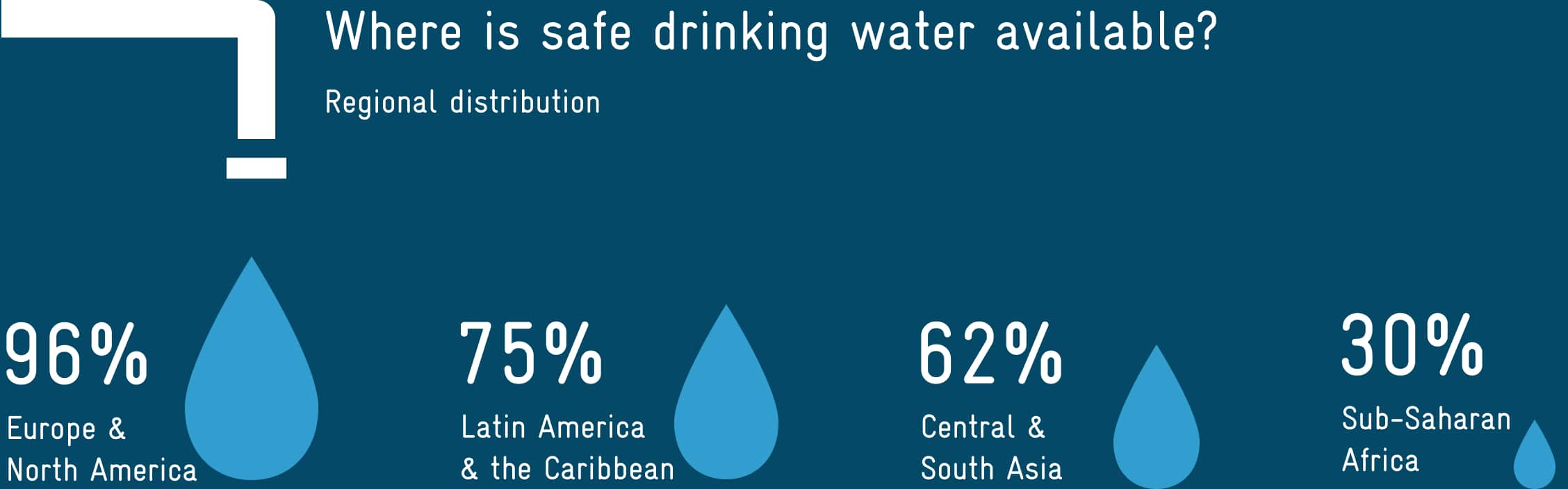
Three out of four people worldwide now have access to safe drinking water. However, there are significant regional differences: in Europe and North America it stands at 96 per cent; in Latin America and the Caribbean it is 75 per cent – in sub-Saharan Africa it is only 30 per cent.
Sources: SDG Indicators, WHO, UNICEF, World Bank. State of the world’s drinking water
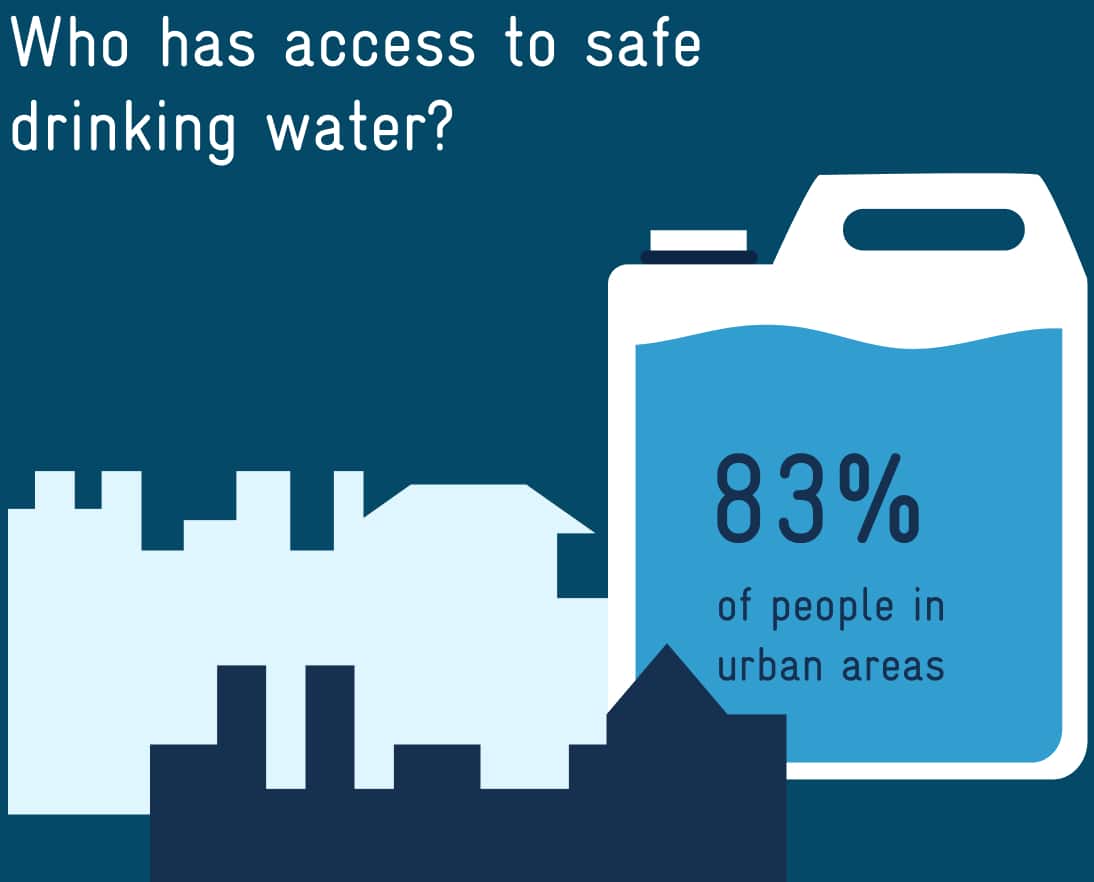
There is also a wide gap between urban and rural areas: in urban areas, 83 per cent of people have access to safe drinking water, while in rural areas the figure is only 60 per cent. People in rural areas of the Sahel – in Chad, Niger, Mali and South Sudan – are the worst off.
Source: WHO, UNICEF, World Bank. State of the world’s drinking water
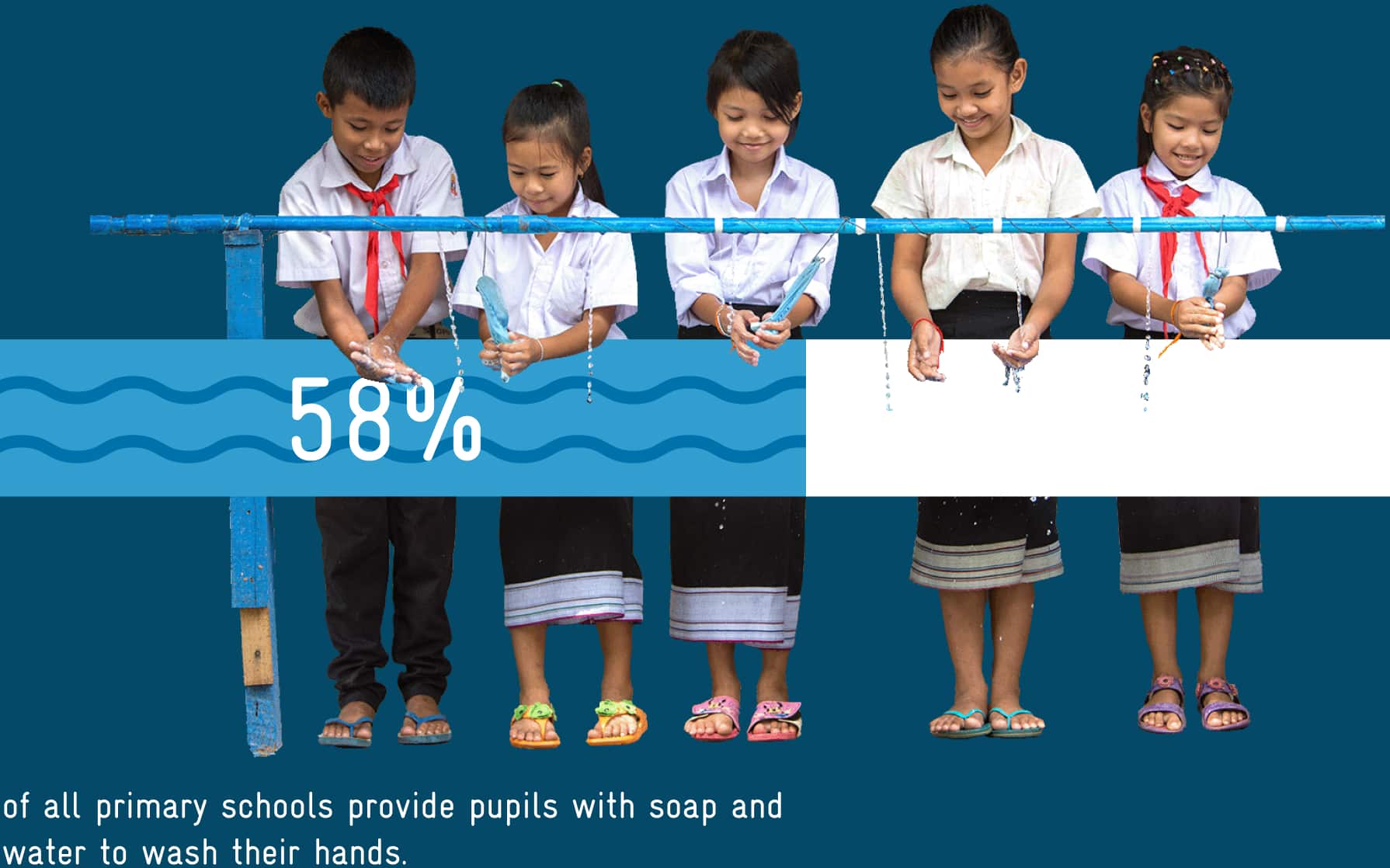

Investments in better water and sanitation quickly pay for themselves. For example, every US dollar spent on improving hand hygiene yields an economic return of 24.6 US dollars thanks to the diseases that are prevented.
The health care systems of many countries would also benefit: if clean water, good washing facilities and better protection against infections were guaranteed, they could save USD 112 billion worldwide every year. The overall economic benefit would even amount to USD 124 billion – because more people would stay healthy and could work.
Source: WHO
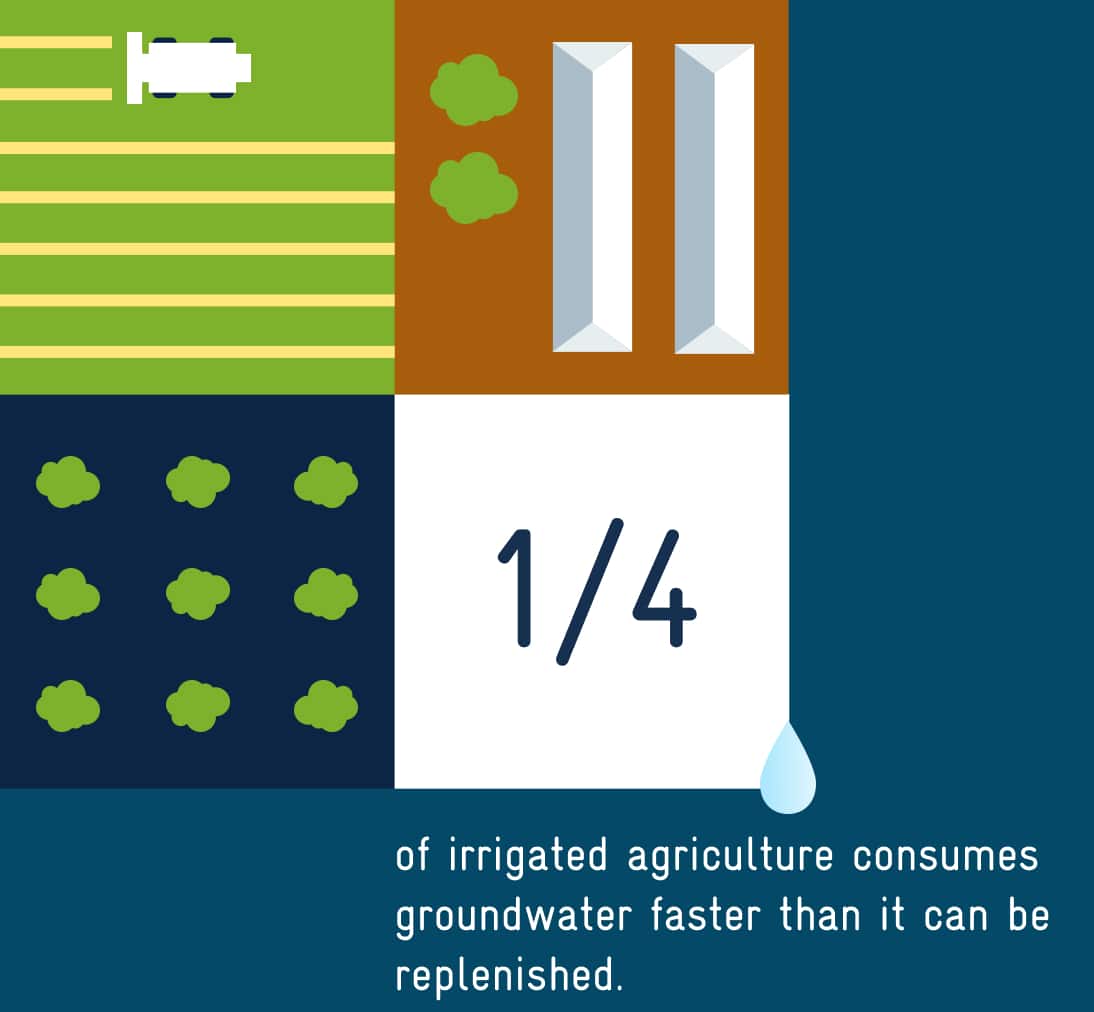
A quarter of irrigated agriculture worldwide consumes more groundwater than is naturally replenished. Once water reserves are depleted, entire farming regions can no longer be irrigated in the long term, putting the food supply for millions of people at risk. Countries in the Middle East and North Africa are particularly hard hit, as are Mexico, Pakistan and northern China. But solutions exist: with GIZ’s support Jordan is treating wastewater for use in agriculture.
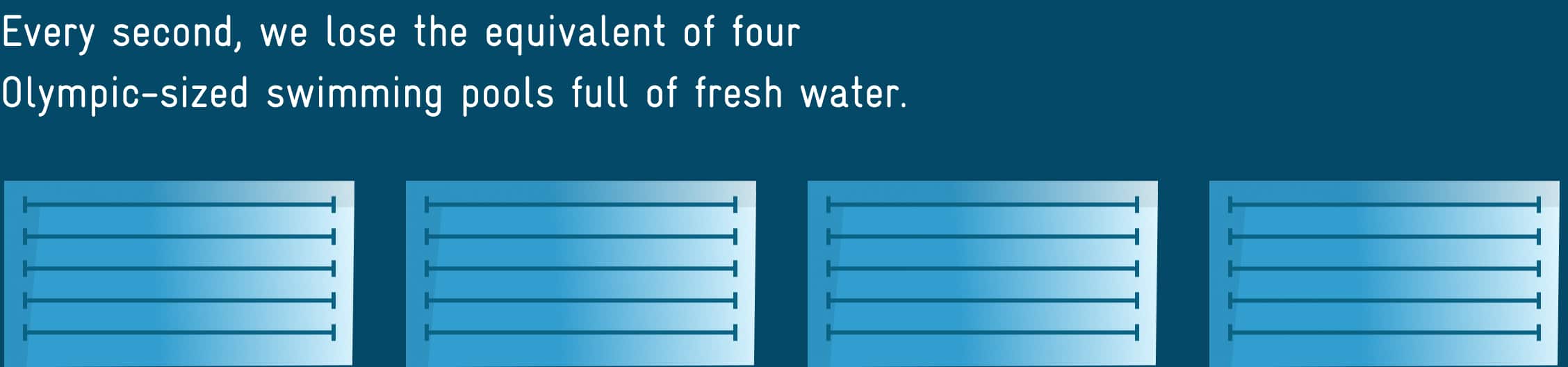
Using water more sparingly and more efficiently would also help. Every year, an estimated 324 billion cubic metres of fresh water is lost through leaks, theft and poor management. That is equivalent to around four Olympic-sized swimming pools per second – and would be enough to supply 280 million people with water for a year. This is precisely where GIZ comes in: in Egypt, it is promoting better water management. This is to ensure that the already scarce resource does not become even scarcer.
Sources: World Bank, GIZ
The Earth’s largest ‘river’ flows through the atmosphere: above the Amazon, ‘flying rivers’ transport huge quantities of water vapour from the tropical rainforest and the Atlantic Ocean through the atmosphere. At times, this water transport can exceed the volume flowing through the Amazon itself. The vapour eventually falls to Earth as rain and is essential to the water cycle. This is another reason why the conservation of tropical forests is so important.
Source: World Economic Forum