The Deutsche Gesellschaft für Internationale Zusammenarbeit (GIZ) GmbH has been working in the Republic of North Macedonia since 1992 – shortly after the country gained independence. In the same year, GIZ opened its office in Skopje. Here, it works with partners from the government, civil society and the private sector in North Macedonia and throughout the Western Balkans.
North Macedonia on the path to the EU: reforms and structural challenges
As an EU candidate country, North Macedonia is implementing reforms and is aligning them with EU law. The country is also facing structural challenges: economic competitiveness, integration into the European labour market, more efficient agriculture and the energy transition require decisive action and consistent reforms.
Environmental impacts are growing, too: air pollution, inadequate water management and climate risks such as droughts and floods need coordinated measures at the national and regional levels.
Furthermore, North Macedonia needs to further strengthen its democratic governance, public administration and socio-economic participation. Only in doing so can the country fulfil its responsibility towards citizens and meet its obligations as a future EU member state.
GIZ in North Macedonia: three priority areas for a shared future
In North Macedonia, GIZ primarily works on behalf of the German Federal Ministry for Economic Cooperation and Development (BMZ). It also implements projects for other German clients as well as for the European Union, the Green Climate Fund and other international organisations. It works with local, national and regional partners locally and in the region as a whole.
GIZ strengthens close cooperation between North Macedonia and Germany as part of the European partnership. The three priority areas are:
- Democracy and the rule of law
- Climate action and environmental protection
- Economic development and employment
GIZ supports North Macedonia in improving and digitalising public services and promoting socio-economic participation. It supports democratic institutions and drives citizen-oriented reforms forward. In this way, North Macedonia fulfils its duties and tasks as a future EU member state.
GIZ promotes renewable energies and energy efficiency – for greater energy efficiency in North Macedonia. The country is adapting to climate change and expanding environmental protection. GIZ supports this process and strengthens the Green Agenda for the Western Balkans in addition to regional cooperation. It also promotes sustainable, resilient agriculture.
GIZ promotes the private sector and supports small and medium-sized enterprises in becoming more innovative and competitive. Regional trade and stronger integration into the European single market open up new markets. This creates jobs and strengthens inclusive growth.
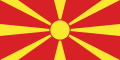
North Macedonia in brief
GIZ local staff
As of: 31.12.2025
- 55 National employees
- 5 International employees
- 2 Integrated experts